If you’ve ever been told you’re “just flexible” or “double-jointed,” but also deal with chronic pain, instability, fatigue, or frequent injuries, you’re not alone.
As both a massage therapist and someone living with hypermobile Ehlers-Danlos syndrome (hEDS), I understand firsthand how complex and misunderstood these conditions can be.
At Balanced Body Therapeutic Massage, we work with many clients navigating Ehlers-Danlos syndrome (EDS) and hypermobility-related conditions. My goal is to help people better understand what may be happening in their bodies and whether therapeutic bodywork could be a good fit for them.

What Is Ehlers-Danlos Syndrome?
Ehlers-Danlos syndrome is a group of genetic connective tissue disorders that affect collagen, which helps support the joints, skin, blood vessels, and other tissues throughout the body.
There are currently 13 recognized types of EDS, each with different symptoms, risks, and levels of severity.
The most common type is hypermobile Ehlers-Danlos syndrome (hEDS), which is commonly associated with:
- Joint hypermobility and instability
- Chronic muscle and joint pain
- Frequent sprains, strains, or subluxations
- Fatigue
- Muscle tension from compensation patterns
Many people go years without answers because symptoms are often dismissed as “normal flexibility” or generalized chronic pain.
How Do You Know If You’re Hypermobile?
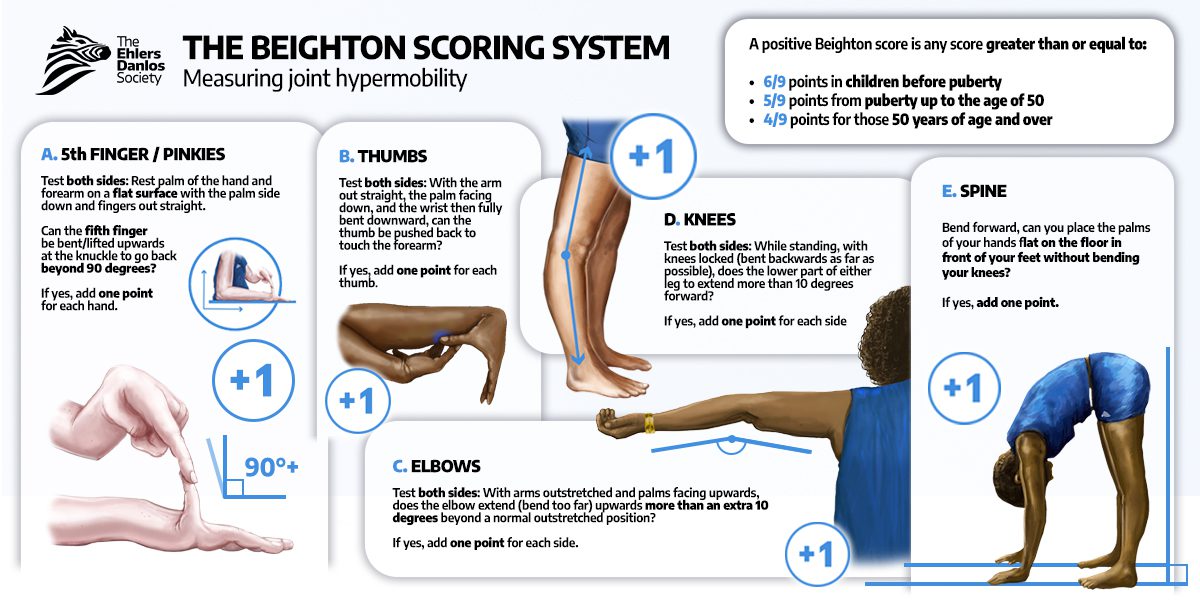
One commonly used screening tool is the Beighton Score, which evaluates mobility in several joints throughout the body.
If you suspect you may be hypermobile or have EDS, The Ehlers-Danlos Society offers helpful educational resources and self-assessment tools:
These tools are not diagnostic, but they can help guide conversations with your healthcare provider.
For more information about EDS and hypermobility disorders, visit The Ehlers-Danlos Society.
Common Comorbidities Seen with EDS
EDS often overlaps with other conditions and syndromes. Some of the more common comorbidities include:
- Dysautonomia and POTS
- Mast cell activation symptoms
- Chronic fatigue
- Headaches and migraines
- Gastrointestinal issues
- TMJ dysfunction
- Anxiety related to chronic pain and nervous system dysregulation
Because connective tissue exists throughout the entire body, EDS can affect far more than just the joints.
Can Massage Therapy Help Ehlers-Danlos Syndrome?
For the right person and with the right approach, therapeutic bodywork can be incredibly beneficial.
As someone with hEDS myself, I’ve learned that hypermobile bodies often require a very different approach than traditional “deep tissue” massage.
At our office, treatment is often focused on:
- Supporting stability rather than forcing mobility
- Reducing protective muscle tension
- Improving body awareness
- Helping calm an overactive nervous system
- Working within the body’s tolerance level
Many people with EDS or hypermobility report improvement in:
- Muscle tension and guarding
- Pain levels
- Stress and nervous system overload
- Mobility and daily function
- Body awareness and movement patterns
The goal is not to aggressively “fix” the body, but rather to support it more safely and effectively.
When Therapeutic Bodywork May NOT Be Appropriate
This is an important conversation that is often overlooked.
While many individuals with hEDS benefit from therapeutic massage and bodywork, there are certain types of EDS and comorbidities where treatment may need significant modification or may not be appropriate at all.
Higher-Risk EDS Types
Certain forms of EDS may require extreme caution, including:
- Vascular EDS (vEDS) due to increased fragility of blood vessels and organs
- Some cases of Classical EDS involving severe skin fragility or bruising
Deep or aggressive bodywork may be inappropriate or unsafe in these situations.
Conditions That May Require Medical Clearance or Modified Sessions
Massage therapy may need to be adjusted, shortened, or postponed for individuals experiencing:
- Uncontrolled POTS or severe dysautonomia symptoms
- Active cardiovascular complications
- Severe mast cell activation flare-ups
- Acute injuries or unstable joints
- Poor tissue healing or recent surgeries
- Severe pain flare-ups where the nervous system is already overwhelmed
This is why individualized treatment and proper communication matter so much.
Why Specialized Training Matters
I’ve completed additional education through the EDS ECHO program, which focuses on the complexities of Ehlers-Danlos syndrome, hypermobility disorders, and related conditions.
That matters because:
- EDS bodies can respond differently to bodywork
- More pressure is not always better
- Some individuals benefit from stretching, while others may need a greater focus on stability and support
- Treatment often needs to be highly individualized based on the person, symptoms, and comorbidities
What to Look for in an EDS-Safe Massage Therapist
If you are searching for massage therapy for Ehlers-Danlos syndrome or hypermobility, it’s important to find someone who understands:
- Joint instability
- Compensation patterns
- Nervous system sensitivity
- The importance of pacing and modification
- That “deeper” is not always better
Every hypermobile body is different, and treatment should reflect that.
Final Thoughts
Living with EDS or hypermobility can be physically and emotionally exhausting, especially when symptoms are misunderstood or minimized.
As both a therapist and someone personally living with hEDS, I understand how important it is to feel heard, supported, and treated as an individual rather than a diagnosis.
With the right approach, therapeutic bodywork can be a valuable tool in helping support pain management, nervous system regulation, and overall quality of life.
Looking for EDS or Hypermobility Massage Therapy in the Lehigh Valley?
If you’re looking for massage therapy for Ehlers-Danlos syndrome, hypermobility, or chronic pain in the Lehigh Valley, we’d be happy to see if our approach may be a good fit for you.
Have questions? Feel free to call our office at 610-653-7701, or book online when you’re ready.